Wednesday, March 30, 2011

The day 1/4 of the world came to a standstill!


This is a post is a tribute to the India-Pakistan match in the Cricket World Cup 2011.  If you said "huh?", read on.
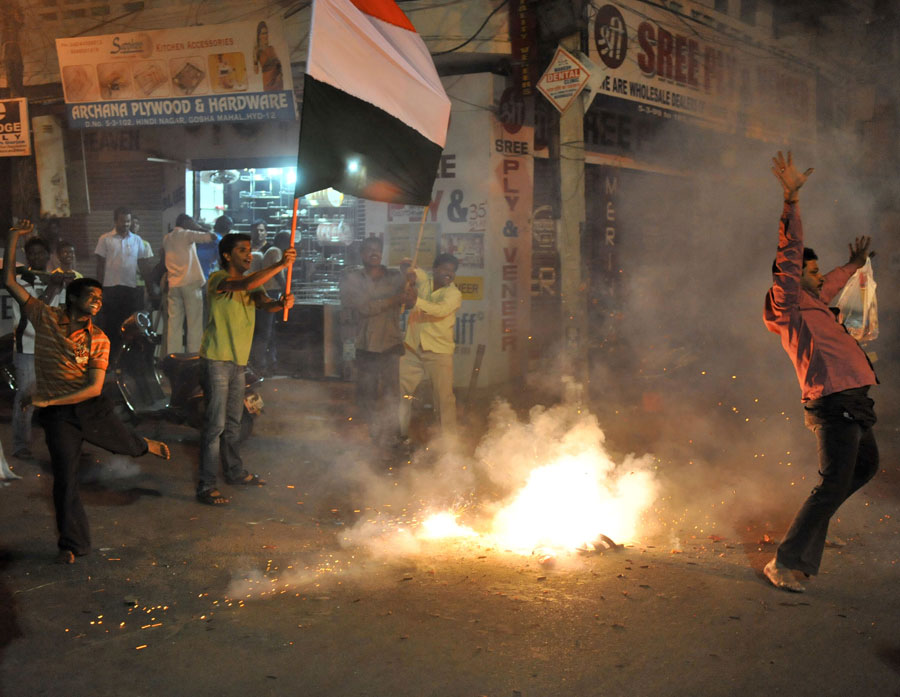
Celebration in the Streets of Ahmedabad after a famous victory

Fireworks in Hyderabad

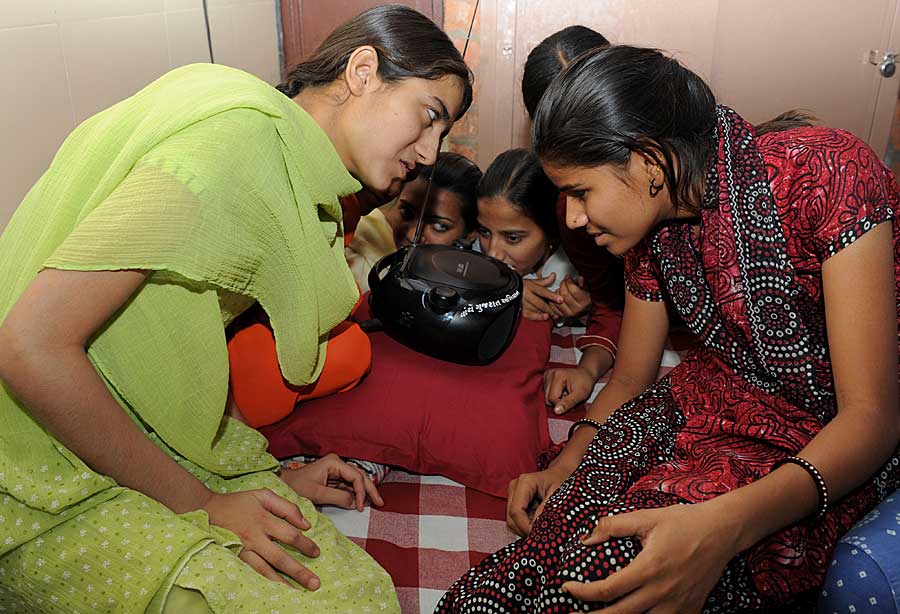
Visually impaired women following the commentary on a transistor radio
I Bleed Blue
Some quotes that will help sum up the game for those who don't know cricket


  • "A cricket match between India and Pakistan is a war without bullets".  
  • " If you took a survey of Indians and Pakistanis today, they will not be clear whether it is more important to defeat your neighbor in cricket or war. Quite likely, a majority will prefer victory in cricket."
  • "Indian and Pakistani cricket traditions are products of the same soil, but over the decades, India became a nation of great batsmen while Pakistan became a nation of great bowlers. How and why this happened is a mystery, although theories abound and the topic is a staple of Asian cricket discussions."
  • "20% of the planet can go back to what they were doing now"


Here are some links to articles and clips about the match:

1.  NPR: Cricket Diplomacy
2.  NPR Historic India Pakistan Match
3.  ABC News: The Thrilla in Mohali
4.  Andy Zaltzman's satire
5.  Saad Shafqat: The ultimate cricket contest  (I really liked this one)
6.  Sambit Bal: Only a match in Mohali (and this one)
7.  BBC: The joy and despair after an epic
8.  BBC: Slideshow - Great pic "I Bleed Blue"
9.  BBC: Video - the mother of all epic battles
10.ESPN Outside the lines: Why you should care about cricket by Wright Thomson (Thanks to Ravi Desai for pointing this one out).
11. Sidin Vadukut:  Thrilling account of an Indian in Switzerland trying to watch The Match - Kindle browser, stolen WiFi, dying batteries and all.

Tuesday, March 8, 2011

CMS Quality and Resource Use Report - A Home Run?

The Centers for Medicare and Medicaid Services sent out a confidential report to a small group of physicians to provide them feedback on their care of fee-for-service Medicare patients.  The report is based on data from 2007.

One physician agreed to share this report.  While we can argue about the quality of the data, inaccuracies, errors etc, it seemed at first glance to be a huge step forward in fixing the problem of variation in practice patterns.  We are all familiar with the data showing how states that spend more money on Medicare patients have worse outcomes (first graph below).  This report brings it down to the level of individual physicians.


Here is one graph that shows the variation in cost of care of Medicare patients with Diabetes amongst 317 physicians in North East Ohio.  These costs were calculated only for physicians who had 30 or more Medicare patients with Diabetes.  These cost were adjusted for risk from co-morbidities.  The range was from 4,300 to 48,300 dollars!

The report also includes quality measures related to process of care (e.g. testing for HbA1c) but not even short term outcome measures like level of HbA1c. 

Of course there will be legitimate quibbling about the quality and accuracy of the data in this report but the startling spread of the cost curve indicates that there is probably some room for improvement in practices at the high end.  With the advent of EHRs and meaningful use, this data may be easier to collect for many more physicians.  Will this thought scare off the physicians on the high end of the cost curve from implementing EHRs?

Can we make a substantial dent in the Medicare budget by impacting this variation?  Atul Gawande described how presently there is no incentive for not doing more tests or spending more money.  This may be the first step towards constructing some incentives. 
  

Thursday, February 17, 2011

Dr. Watson treats a patient with back pain!

The "amazing" performance of the IBM Watson in the Jeopardy contest vs. 2 of the best past performers has lead to headlines like

  • Machine stomps on humanoids
  • Watson is creaming the humans
  • Ken Jennings himself wrote "I for one welcome our new computer overlords"

Yesterday we saw the news of IBM partnering with Nuance (the makers of Dragon) to develop a physician assistant.  The concept being this would be way to rapidly consider all the related texts, reference materials, prior cases, and latest knowledge in journals and medical literature to gain evidence from many more potential sources than previously possible.  


One can imagine a day in the future where patients will give their history over a phone to a computer that triages them to appropriate care.  So here is what might happen when some one with back pain calls in:


Kidding aside, here are some examples where a supercomputer could be useful as a physician assistant:
  1. Have all the EHR data for an individual be fed into the computer.  Then when a physician wants to know something like:
    1. Is there a relationship between the rise in creatinine and any medication or procedure? Or
    2. What could be the cause of the hyperkalemia?You could get an answer like creatinine increased 3 days after starting Lisinopril for example OR the pt developed non-gap acidosis and hyperkalemia and this is probably from a type IV RTA due to his diabetes.
  2. Have all the EHRs from major hospitals in a city be connected to the Computer.  Then the computer would know the prevalence and incidence of various conditions or the resistance patterns of microbes to antibiotics in that area.  You could then ask the computer to consider the pretest and posttest probabilities and likelihood ratios of various conditions and tests and spit out the odds.  This would help us in appropriate test ordering and medication prescriptions.
  3. Record my conversation with the patient, a video of my examination of the patient and list all my queries (that I ask the computer to do on the EHR) and create a note!