Showing posts with label Twitter. Show all posts

Saturday, April 25, 2015

A Personal Learning Network becomes a Print Journal Issue: Why Academics Really use Twitter

Social Media allows a motivated and engaged learner to build connections that can enhance lifelong learning.  The connections become a learners Personal Learning Network or PLN.  The ability of social media to help a learner find and connect with the right people that might be otherwise impossible to "meet" in real life is one of its huge potential advantages.

This can be a difficult concept to convey to someone who may have a very negative attitude of Twitter.  One can hardly blame them for thinking that Twitter is a time waster, that there is a huge noise to signal ratio with very little tangible benefit.

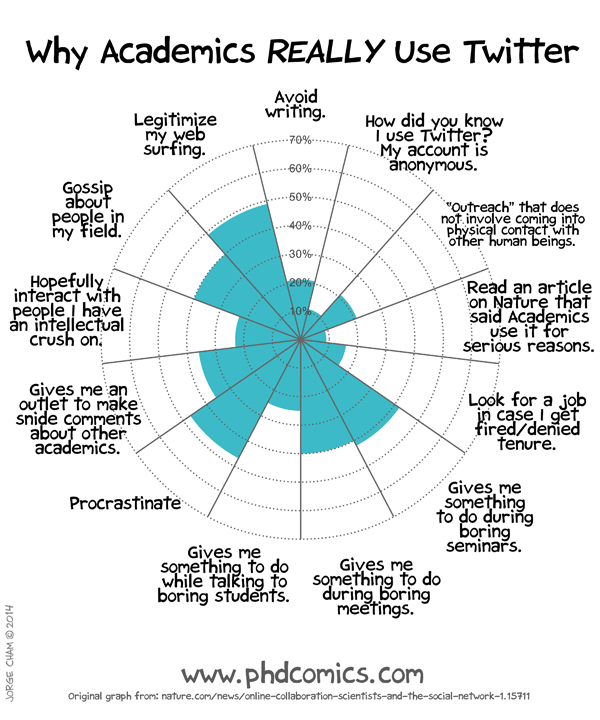
A famous Nature study showed that very few academics use Twitter compared to sites like Google Scholar.  This led to a spoof by PhD Comics on "Why Academics Really use Twitter".  This is quite funny maybe because it has an element of truth for those who use Twitter.  At the same time infographics like this might unintentionally dissuade people from trying out Twitter as it may reinforce their beliefs about its lack of usefulness.

Now we have a great example of how a PLN created on Twitter led to an entire issue of a print journal.  The credit goes to Margaret Chisholm who was the editor of the special issue of "International Review of Psychiatry" and put together the issue with the help of a group of authors who mostly got to know each other first on Twitter and are part of a large PLN of health care social media users.
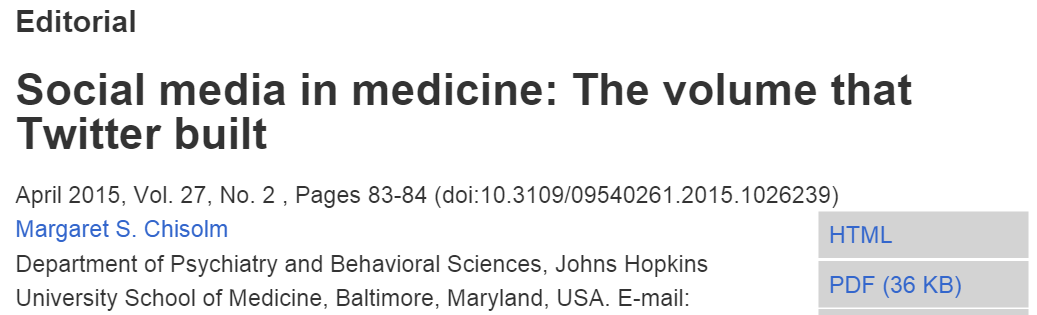
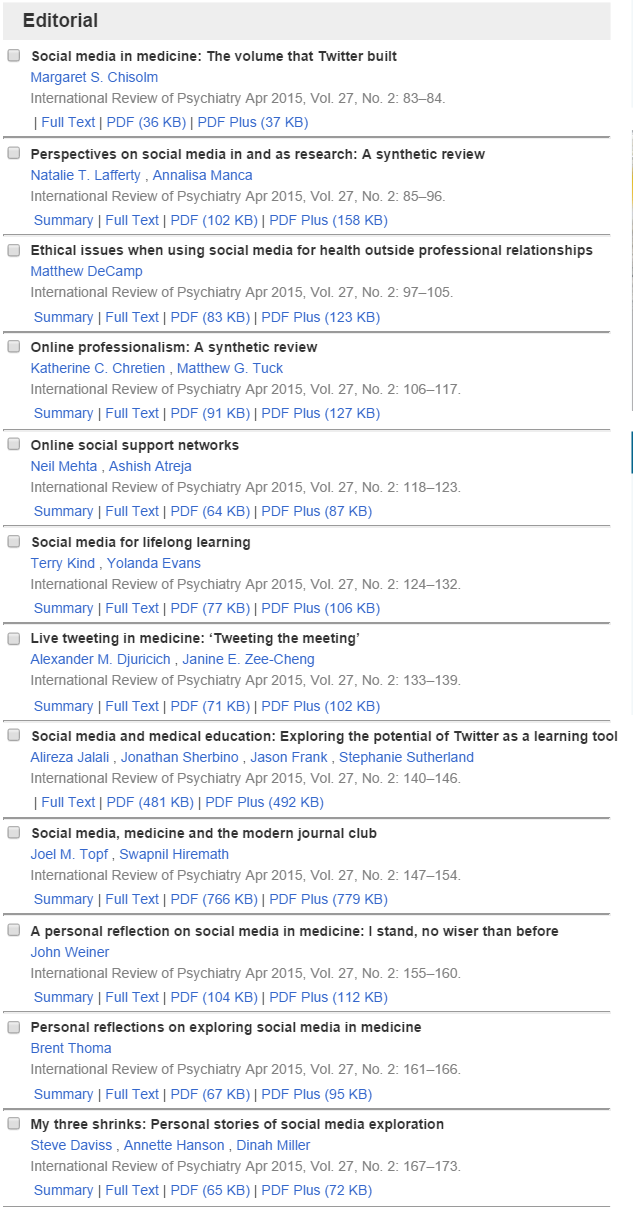


Granted, the special issue was regarding the use of Social Media but it could well have been any other topic in biomedical sciences where the scientists engage in social media.  This special issue of a print journal may be an excellent showpiece of the huge potential benefit of social media for academics - to create a PLN for lifelong learning.


Monday, May 26, 2014

Twitter for awareness, Google+ for discussion?

This is a follow up post to the one I wrote in February, regarding the lack of in depth discussions on social media and the fact that people often share links to posts they have not even read.  The suggestion was that the academic world needs its own "Acamedia" rather than rely on social media alone.

Since then both NPR and NY Times have echoed similar thoughts which leads me to suggesting a Twitter + Google+ model for academia.

NPR played a terrific April Fool's joke:
From "http://www.npr.org/2014/04/01/297690717/why-doesnt-america-read-anymore"
NY Times had an opinion piece by Karl Taro Greenfeld which discusses how one can fake cultural literacy by picking up bits of information on social media streams instead of consuming the primary source.

http://www.nytimes.com/2014/05/25/opinion/sunday/faking-cultural-literacy.html?smid=tw-nytimes&_r=0

The author states,
"It's never been so easy to pretend to know so much without actually knowing anything."
An example from the piece,
"What was Solange Knowles's elevator attack on Jay-Z about? I didn't watch the security-camera video on TMZ - it would have taken too long - but I scrolled through enough chatter to know that Solange had ...."
Some may argue that spending any amount of time to learn more on that story is time wasted but if you have to know something so you don't feel left out at some cocktail conversation, IMHO this is a fair use of social media.

One would just hope that people are upfront and state that they are expressing an opinion without having read or consumed the primary source.
This gets back to the point about the role of social media for discussing academic literature.  Social media is great for sharing links to articles and thus increasing awareness about new evidence as it comes out.  Folks new to social media need to realize that sometimes folks that share may not have read the posts they are sharing.  They are essentially just sharing the fact that the headline is interesting.  In my February post I suggested that sites like Twitter should add a check box to indicate that the "sharer" had actually read the article.

Another option is to put in a disclaimer that you have not e.g. TL;DR (Too long; Did not read).

Maybe as the culture of popular social networks (e.g. Twitter) evolves, everyone will realize that this is the default.  Maybe once you identify the article or post to discuss with like-minded people, it is necessary to do it in a different setting which has a different cultural default - one where you don't post unless you have read the piece? Thus a physicist may use Twitter to keep up with trending health news stories like new lipid guidelines but use a different medium to discuss the latest article on Higgs Boson particle while the converse may be true for a physician.

Google+ may be a perfect model for this.  It has several factors to support this model:
  • Ability to connect with other people with similar interests
  • No limits on length of posts
  • Communities
  • Authentic profiles 
  • Hangouts and Hangouts on Air 
My previous post had an example of using Google Hangouts on Air for a CME panel discussion.  Once there is full integration between Gmail, Blogger, Google Drive and Google+  and Hangouts, it will create a perfect ecosystem for authentic synchronous and asynchronous discussions - an Acamedia?

Monday, December 24, 2012

Web 2.0 and Social Media for Cardiologists - one-click solutions

I was preparing for my presentation at a major medical conference in India.  The presentation is on use of Social Media for Physicians.  The conference is focused on mostly cardiology topics for general internists.  The organizers asked me to make sure the talk was practical and could leave the attendees with some easy to follow take home points.

As always the challenge with a presentation is knowing your audience.  I did not have a good feel for this, not having attended this conference before.  I struggled to select the appropriate content for the presentation.  I needed to show them what was possible, and then what they could do to get started.

I decided to give them some highlights on using Google Reader to stay current with medical (cardiology) literature and use of Twitter to network with cardiologists and to get updates and insights.  To make it easy for them to get started I created

  • An OPML bundle of cardiology journal feeds and
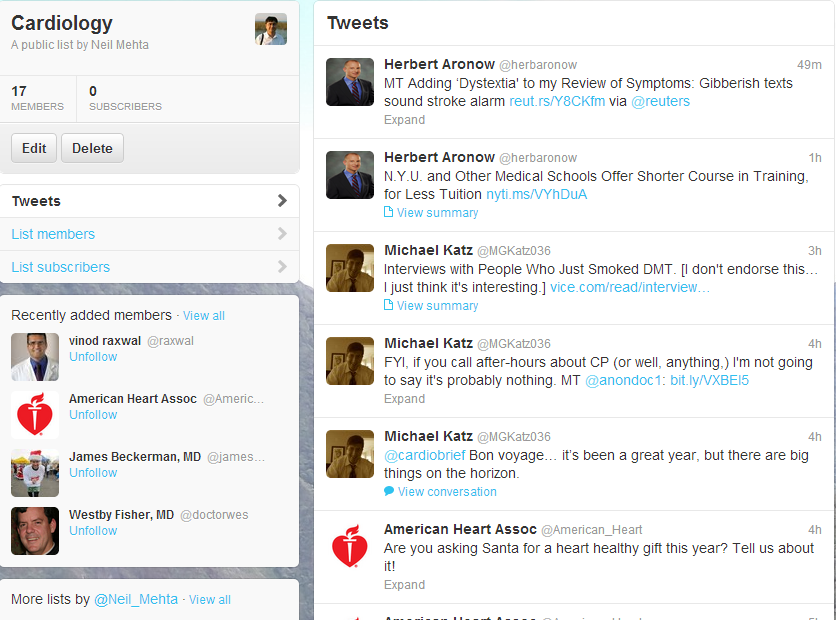
  • A Twitter list of cardiologists to follow - this post by Larry Husten was very helpful to get started.
Having gone through that effort, it is probably worthwhile to share these for others to use and share.

Getting your cardiology journals delivered to your "doorstep"
  • Get started with Google Reader
  • Then subscribe to 11 top cardiology journals and 3 blogs with one click.  (Click on subscribe)
  • Go to Google Reader and all 11 journal feeds should be available at one place.  These can be tagged and shared on Twitter, FB or Google+, Tumblr etc and also be searched!
RSS Feed Bundle or 11 top Cardiology Journals

Getting your cardiology fix on Twitter
Twitter List for Cardiology Updates

So there you are - 2 quick one-click solutions to introduce cardiologists into Web 2.0/Social Media.

Addendum:
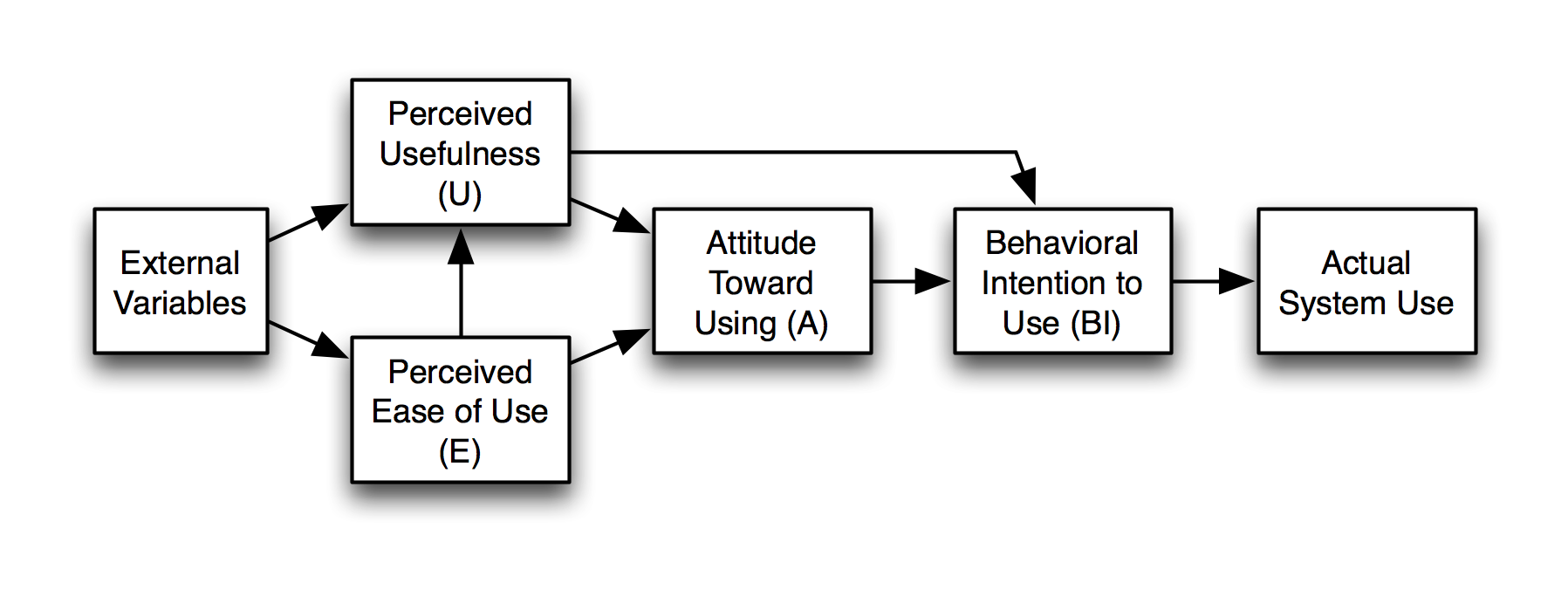
A conversation with @Allan Palmer on Google+ made me realize that this might have come across as a final solution for the attendees.  I need to stress that this is just the first step. There are several frameworks for understanding why some people are late to adopt IT innovations.  The Technology Adoption Model is based on:

  • Perceived Usefulness and 
  • Perceived Ease of Use

The Diffusion on Innovation theory by Rogers adds that an innovation must be easy to try, and its use should be visible to others (peers).  

Based on these frameworks, one would seek to provide late adopters an easy to use approach to try these tools, and allow them to see other colleagues using it.  Ideally one would add some hypothetical cases to illustrate the utility.

Thus for this conference, I could create an example of a patient on a statin who has questions about adding niacin to the regimen or a patient with history of coronary artery disease who is on a betablocker and getting severe fatigue from it.  These would lead to recent articles on these topics and conversations on Twitter and blog posts about these studies.

Friday, May 11, 2012

Is Academic Medicine Reaching a Twitter Tipping Point?

The last 3 days have been exciting and invigorating - meeting old friends and making new ones at the SGIM Annual Meeting in Orlando.  There have been some amazing presentations and workshops.

Looking back over the last few days, it seems that SGIM members are beginning to adopt social media.

  • The SGIM education technology group decided to use Twitter instead of a listserv to stay in touch between the annual meetings.  The plan is to use a #SGIMedTech hashtag for the group
  • There was a great tweetup of SGIM tweeps 


  • A Social Media Interest Group was created with #SGIMSoMe hashtag
  • There is now a growing list of SGIM members using Twitter
  • The group decided to do a project to study the effect of SoMe to help other interest groups improve communication between meetings.  
Does this mean academic medicine is reaching a tipping point?  There is still a lot of reluctance to adopt Social Media but the walls might be coming down.  I expect in 1 or 2 years, I will look back at this post and remember how this all started with a tweetup on one Thursday evening in Orlando!

Friday, April 27, 2012

Will Medical Educators Adopt Social Media?

This morning I had the privilege to do a presentation on the use of Social Media in Medical Education to a group of seasoned medical educators.  David Pilasky, Jason Korenkiewicz and Nicholas Arcieri made up the rest of the presentation team.  This was a group well versed in pedagogy and the changing landscape of healthcare in the country.  But they were mostly unfamiliar with possible pedagogic uses of tools like Tweetchats and Google Hangouts.
We did a pre and post session poll to gauge the knowledge of and attitudes towards use of Social Media in Medical Education.

Here is a storify summary of the session.  It is impressive to see the gradual change in the audience as the session went on.

23 minutes ago · 1 views
  • 52

The MedEd Plenary on Social Media

An introductory session on the use of Social Media in Medical Education - participants included people involved in various aspects of medical student education and were mostly new to Twitter.
  1. Asked the audience about their reaction to Twitter. Tweet's captured the response from the audience! (Not the poster's opinion)
  2. Share
    First reaction on the use of Twitter. "Ugh" #someded
  3. Share
    #someded Why people don't use twitter? Get off my lawn, too busy.
  4. The audience slowly began to thaw 
  5. Share
    Educators beginning to see the use of social media. @Neil_Mehta is on fire! #someded
  6. Share
    Knowledge is about to be disseminated, loving it! #someded
  7. Share
    Love it! @dsmwiener: #someded About to learn more about social media from Neil Mehta
  8. Gave a very very brief demo of how to use Twitter with #Someded hashtag.  There were a few tentative first tweets!
  9. Share
    #someded Hello everyone. This is my first tweet ever!


    12 hours ago
  10. Share
    #someded


    12 hours ago
  11. Share
    #someded hello


    12 hours ago
  12. Share
    #someded hello everyone

    12 hours ago
  13. Share
    #someded I finally got through!

    12 hours ago
  14. Nicholas Arcieri did a great job encouraging the users.
  15. Share
    Don't be afraid of Twitter, it can't bite, I promise! #someded
  16. Share
    everyone is doing a great job for their first time tweeting! #someded
  17. We started off with a demonstration of a case discussion on Twitter
  18. Share
    We have a 50-year old male with low back pain #someded
  19. Share
    From CWRU: Does he have bladder or bowel incontinence? #someded
  20. Share
    History of cancer? #someded
  21. Share
    @KorenkiewiczJ great question... no cancer, no incontienece #someded
  22. We got some questions about the typical red flags.  Prompted the audience for more questions and got some great ones.
  23. Share
    Any other questions? before we proceed to exam #someded
  24. Share
    Does he have fever or chills? #someded
  25. Share
    #someded does he have insurance?

    12 hours ago


  1. Any other symptoms? #someded
  2. Share
    #someded what is height and weight
  3. There was a great response from the group, they start seeing the potential and start thinking of potential applications.
  4. Share
    How do medical educators use social media? @Neil_Mehta uses tweet chat w/ students. #SoMedEd

    ReplyRetweet12 hours ago
  5. Share
    <- chat room on steriods #someded

    12 hours ago
  6. Share
    #someded Very cool!

    12 hours ago
  7. Share
    Hi! This may have promise! #someded


    12 hours ago
  8. Share
    #someded multiple uses in med ed


    12 hours ago
  9. Share
    #someded we are getting there


    12 hours ago
  10. Share
    #someded could use this to chat with incoming students.

    11 hours ago
  11. Share
    #someded A great advantage is connecting with people you don't normally get to collaborate with!

    11 hours ago
  12. Share
    #someded grouptweet.com for private conversations
  13. Share
    #someded @Colleenocg Twitter and Twitter fountain could be useful for use in Group Application Exercises within TBL


    11 hours ago
  14. Share
    Storify sounds like it has a lot of potential... #someded


    11 hours ago
  15. The conversation was picked up by folks outside the meeting
  16. Share
    RT @UCPritzker: How do medical educators use social media? @Neil_Mehta uses tweet chat w/ students. #SoMedEd
  17. Share
    RT @UCPritzker: How do medical educators use social media? @Neil_Mehta uses tweet chat w/ students. #SoMedEd
  18. Share
    RT @UCPritzker: How do medical educators use social media? @Neil_Mehta uses tweet chat w/ students. #SoMedEd
  19. Share
    RT @UCPritzker: How do medical educators use social media? @Neil_Mehta uses tweet chat w/ students. #SoMedEd
  20. Some concerns, some anxiety, barriers and some great humor!
  21. Share
    #someded I'm going to start just printing the Internet


    11 hours ago
  22. Share
    #someded Very informative article. Glossary makes me realize how little I know.

    11 hours ago
  23. Share
    #someded This seems complicated for widespread faculty use


    11 hours ago
  24. Share
    I am a novice in learning a new skill #someded

    11 hours ago
  25. Share
    #someded we need tutors/mentors


    11 hours ago
  1. Many concerns about identity authenticity & management #someded
  2. Share
    #someded iPad interface is not great


    11 hours ago
  3. Share
    #someded that's it! I'm going back to stamps!
  4. Some feedback; Some Tips and resources
  5. Share
    #someded Well worth the time. 

    11 hours ago

  6. Share
    IT session was user friendly and fun--CWRU was outstanding! #someded


    11 hours ago
  7. Share


    Great time talking to student services, very good questions. #Someded
  8. Share
    The article is very informative as I knew nothing about this new thing #someded


    11 hours ago
  9. Share
    RT @PeterMMarzuk: #someded thanks to all our friends from case for a great meeting


    11 hours ago
  10. Share
    You can follow people in this feed by putting the mouse over their name and the follow button should pop up, then just click follow #someded
  11. Share
    RT @nicholas_urmc: Here is a great guide on #GettingStartedWithTwitter paulpduxbury.com/HowToTwit...#someded
  12. Share
    RT @nicholas_urmc: You should take your IT guy to lunch and make him tell you all of the twitter secrets.... #someded
  13. We did a pre and post session ARS poll which showed an impressive change in knowledge and intention to change behavior (use SoMe in teaching).  This was a terrific audience - who says medical educators can't be open minded about change!


What about the pre and post data?  Well we did not do an IRB for this study so would not be able to reveal that results ;-(