Social Media allows a motivated and engaged learner to build connections that can enhance lifelong learning. The connections become a learners Personal Learning Network or PLN. The ability of social media to help a learner find and connect with the right people that might be otherwise impossible to "meet" in real life is one of its huge potential advantages.
This can be a difficult concept to convey to someone who may have a very negative attitude of Twitter. One can hardly blame them for thinking that Twitter is a time waster, that there is a huge noise to signal ratio with very little tangible benefit.
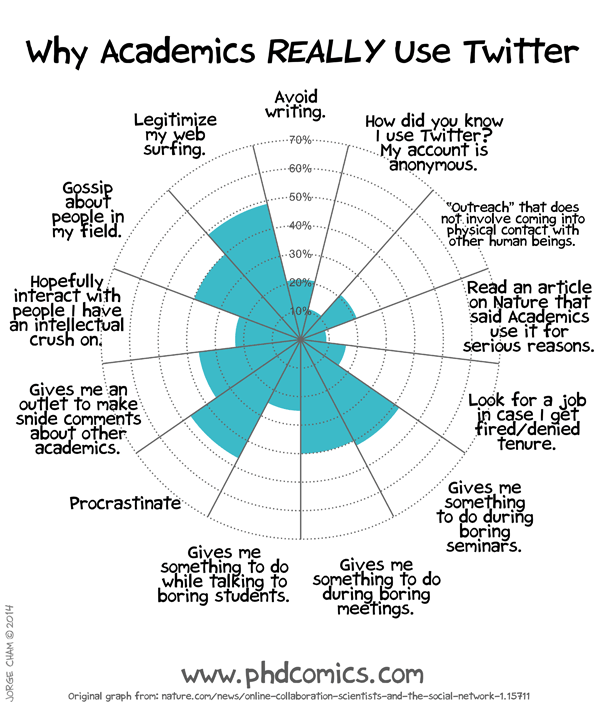
A famous Nature study showed that very few academics use Twitter compared to sites like Google Scholar. This led to a spoof by PhD Comics on "Why Academics Really use Twitter". This is quite funny maybe because it has an element of truth for those who use Twitter. At the same time infographics like this might unintentionally dissuade people from trying out Twitter as it may reinforce their beliefs about its lack of usefulness.

Now we have a great example of how a PLN created on Twitter led to an entire issue of a print journal. The credit goes to Margaret Chisholm who was the editor of the special issue of "International Review of Psychiatry" and put together the issue with the help of a group of authors who mostly got to know each other first on Twitter and are part of a large PLN of health care social media users.
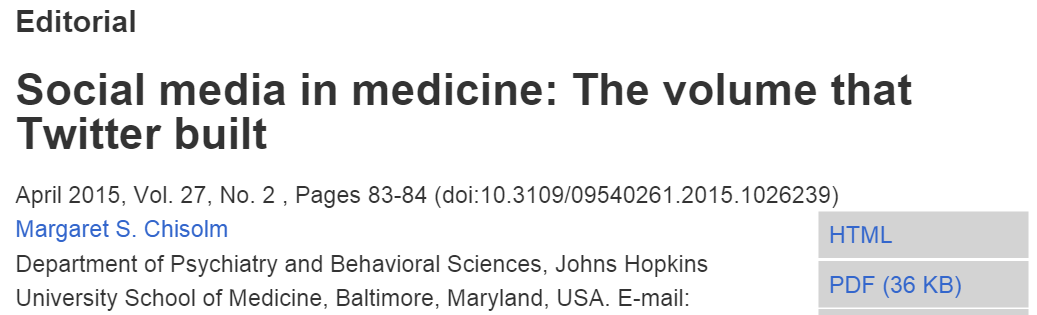
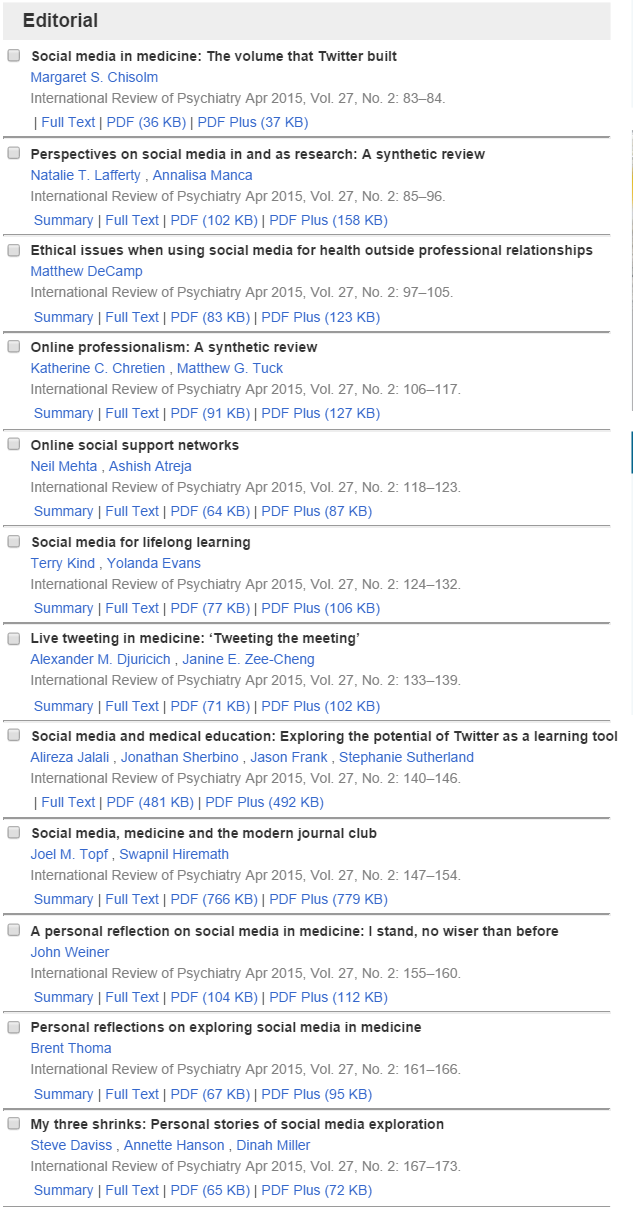
Granted, the special issue was regarding the use of Social Media but it could well have been any other topic in biomedical sciences where the scientists engage in social media. This special issue of a print journal may be an excellent showpiece of the huge potential benefit of social media for academics - to create a PLN for lifelong learning.
This can be a difficult concept to convey to someone who may have a very negative attitude of Twitter. One can hardly blame them for thinking that Twitter is a time waster, that there is a huge noise to signal ratio with very little tangible benefit.
A famous Nature study showed that very few academics use Twitter compared to sites like Google Scholar. This led to a spoof by PhD Comics on "Why Academics Really use Twitter". This is quite funny maybe because it has an element of truth for those who use Twitter. At the same time infographics like this might unintentionally dissuade people from trying out Twitter as it may reinforce their beliefs about its lack of usefulness.
Now we have a great example of how a PLN created on Twitter led to an entire issue of a print journal. The credit goes to Margaret Chisholm who was the editor of the special issue of "International Review of Psychiatry" and put together the issue with the help of a group of authors who mostly got to know each other first on Twitter and are part of a large PLN of health care social media users.
Granted, the special issue was regarding the use of Social Media but it could well have been any other topic in biomedical sciences where the scientists engage in social media. This special issue of a print journal may be an excellent showpiece of the huge potential benefit of social media for academics - to create a PLN for lifelong learning.

